
A Practical Guide to Agentic LLM Frameworks
A practical overview of agentic LLM frameworks: reasoning, planning, tool use, and the real challenges of running them in production.
DataFramer Team
When I was at SaaStr and Dreamforce in San Francisco in September 2024, nearly every AI conversation eventually turned to agents. Teams were moving beyond single-prompt LLM calls and building systems where models could plan, use tools, and hand off tasks to each other. A lot of it was still early, but the direction was clear.
This article covers what agentic LLM frameworks are, where they’re most useful, which frameworks are worth considering, and what it actually takes to run them reliably.
What makes a framework “agentic”?
Traditional LLM apps send a prompt, get a response, done. Agentic frameworks expand on this by giving models the ability to:
- Use tools: Call APIs, run code, search the web, query databases
- Maintain memory: Keep context across multiple steps or sessions
- Plan: Break a goal into subtasks and decide which to do next
- Collaborate: Multiple agents with different roles working together on a shared task
The result is systems that can handle multi-step workflows autonomously, where the model decides not just what to say but what to do next.
Where agentic systems work well
Software development workflows. An agent might write code, another tests it, a third reviews it for security issues. Instead of a single model doing everything, specialized agents handle what they’re best at. Teams using systems like Cursor or Claude Code are already working with agentic patterns, even if they don’t always call them that.
Business process automation. Regulatory compliance checks, report generation, data analysis pipelines: these involve multiple steps across multiple data sources. An agentic system can handle the orchestration that would otherwise require custom code for every workflow.
Personalized support at scale. Customer support agents that pull from conversation history, internal knowledge bases, and ticketing systems to give responses tailored to the customer’s actual situation rather than generic answers.
A customer support query might be handled by four agents working together: a query classifier routes the request, a knowledge retriever pulls relevant context, a response generator drafts an answer, and a quality checker reviews it before it goes out. Each agent does one job well, and the orchestration layer passes work between them.
Available frameworks
The ecosystem has matured quickly. These are the most widely used options today:
| Framework | Strengths | Weaknesses | Best for |
|---|---|---|---|
| LangGraph | Graph-based task modeling, official LangChain product, strong production track record | Steeper learning curve, requires understanding graph concepts | Complex workflows with interdependent tasks |
| AutoGen | Flexible multi-agent conversations, strong Microsoft/academic backing, supports human feedback | Setup complexity grows with task complexity | Research and enterprise applications with multiple specialized agents |
| CrewAI | Fast to get started, clean abstractions, modular design | Built on LangChain (adds dependency weight), less mature for complex nested workflows | Prototyping and straightforward multi-agent pipelines |
LangGraph has become the dominant choice for production-grade agentic systems. AutoGen is strong in research contexts and cases where you need fine-grained control over agent conversations. CrewAI is the fastest way to get something working.
Many teams also write custom internal orchestration using LlamaIndex or LangChain directly. This requires more upfront work but gives you exactly the control you need when off-the-shelf frameworks don’t fit your specific workflow.
Other frameworks worth knowing: OpenAI’s Agents SDK, Google’s Vertex AI Agent Builder, and Amazon Bedrock Agents for teams already committed to those cloud providers.
Real limitations
Latency. Each agent step adds inference time. Complex workflows with five or six agent hand-offs can take 30-60 seconds, which is fine for batch processing and unusable for real-time interaction.
Cost. More agents mean more LLM calls. If each call also involves tool use (web search, database queries), costs compound fast. High-value tasks justify it; commodity tasks often don’t.
Alignment drift. Autonomous agents can stray from their intended goals, especially in dynamic environments or when encountering edge cases they weren’t designed for. A customer support agent that starts making up policies, or a code agent that starts deleting files rather than debugging them, is a real risk.
Testing and monitoring agentic systems
This is where most teams underinvest. Testing individual components doesn’t tell you how the full system behaves.
Test individual agents first.
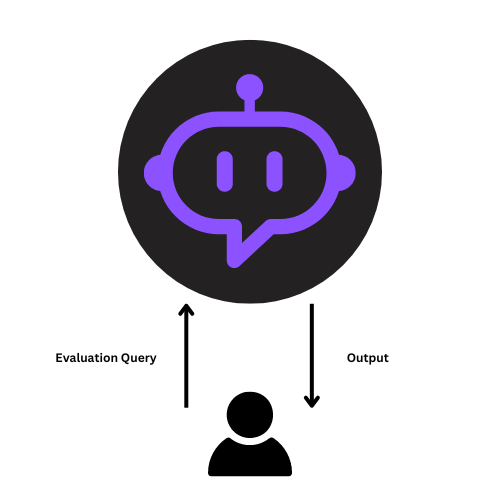
Each agent should work correctly in isolation before you test it in a pipeline. Key questions: Does it handle malformed inputs? Does it stay within its intended scope? Does it call tools correctly?
Then test agent interactions.
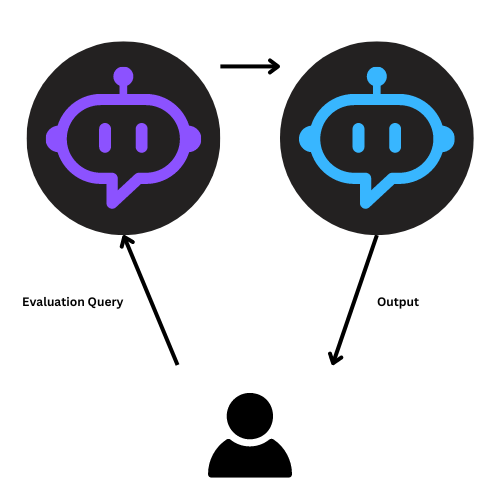
Multi-agent tests simulate full workflows. The most important question is whether one agent’s failure cascades. If the retriever returns garbage, does the generator hallucinate confidently, or does the system flag the issue?
Human-in-the-loop evaluation. For any agent workflow that touches customers, handles money, or produces content that will be acted on, periodic human review is essential. LLMs hallucinate, ignore instructions, and produce subtly incorrect outputs. When you chain multiple models together, errors compound. Having humans review a sample of agent trajectories regularly is the only reliable way to catch systematic problems before they affect too many users.
Structured review matters here. The challenge isn’t getting humans to look at outputs; most teams do that. The challenge is making the review structured enough that findings compound. If an expert reviewer catches something in one workflow and that knowledge doesn’t carry over to future reviews, you’re doing the same work repeatedly. Building rubrics, capturing what reviewers flag, and feeding those lessons back into evaluations is what makes the review process actually improve the system over time.
Performance monitoring. Track response latency per agent, tool call success rates, and API errors. Agentic systems have more failure modes than single-model apps, and you need visibility into each one.
Evaluating agentic behavior systematically
Agentic systems introduce evaluation challenges that don’t exist in single-prompt LLM apps.
Trajectories, not just outputs. With a standard LLM call, you evaluate one input and one output. With an agentic system, you have a trajectory: a sequence of decisions, tool calls, and intermediate outputs that led to the final result. The final answer can be correct while the path to it involved bad decisions. It can also be wrong for reasons that are several steps back in the chain. Evaluating only the final output misses most of the failure surface.
AgentBench (Liu et al., 2023), a benchmark for evaluating LLMs as agents across eight environments including web browsing, code execution, and database interaction, found that even the best models at the time failed on a large fraction of multi-step tasks. The failure modes were distributed across reasoning, tool use, and instruction-following, not concentrated in any single place.
Agentic failure taxonomy. Not all failures are the same, and understanding the category helps target the fix:
- Reasoning errors: the agent draws the wrong conclusion from the available information
- Tool call errors: the agent calls the right tool but with wrong parameters, or calls the wrong tool entirely
- Instruction drift: the agent deviates from its operating constraints over multiple steps, often gradually
- Context loss: relevant information from earlier in the trajectory is forgotten or overridden by later steps
- Cascade failures: an error in one agent propagates unchecked to downstream agents
Knowing which of these is occurring requires reviewing trajectories, not just final outputs. Aggregate accuracy metrics on final answers mask the distribution of failure types underneath.
Non-determinism complicates regression testing. Because LLMs are probabilistic, the same agent workflow can produce different trajectories on different runs. τ-bench (Yao et al., 2024), a benchmark for tool-using agents in realistic customer-service domains, measured this directly: even strong function-calling models often failed to complete the same task consistently across repeated trials, with reliability dropping sharply as the number of trials increased. An agent that works once is not the same as an agent that works every time.
This makes traditional regression testing harder, because you can’t just assert the exact output. Regression suites for agentic systems typically test behavioral properties (did the agent stay within scope, did it call the right tool, did it follow the rubric) rather than exact outputs. Building these suites from human-reviewed trajectories gives you tests that reflect what “correct” actually means for your domain.
Getting to production
The teams that get agentic systems to production reliably tend to share a few practices: they start with a well-understood workflow rather than an ambitious one, they build evaluation harnesses before they build the full pipeline, and they treat human review as part of the system rather than an afterthought.
The frameworks handle orchestration. The harder problem is quality: making sure agent behavior is correct and improving rather than drifting, and doing that systematically enough that lessons from one workflow help future ones.
How DataFramer Helps
DataFramer handles the quality problem the frameworks leave to you. It searches agent traces for the failures that hide a few steps back, routes them to an expert who can judge whether the behavior was right, and calibrates judges on that behavior so you can check it at scale. Because every review is captured, the lessons from one workflow carry into the next instead of starting over.
A Guide to Picking Your LLM Tech Stack
A practical breakdown of every layer in the LLM stack: models, orchestration, storage, and ops.
 Puneet Anand
 Eval Coverage Matters More Than Dataset Size
The issue is rarely too few eval rows. It is eval data that misses the real spread of cases, slices, and failure modes.
 Puneet Anand
 LLM-as-Judge: Why It's Hard to Get Right
When LLM-as-judge works, when it breaks down, and what it actually takes to build one you can trust.
 Puneet Anand
 Get started
Start improving your business outcomes.
Understand how AI is affecting your users and business. Make every AI workflow more accurate, more used, and more valuable.